
Just Another Vanitas Bending Reality at Mind Games - Art Live!
Illusion captured brilliantly by @anne.and.percy
“I’m impressed with your art. It’s kind of mind-blowing and the fact that it’s so precise made it even better.”
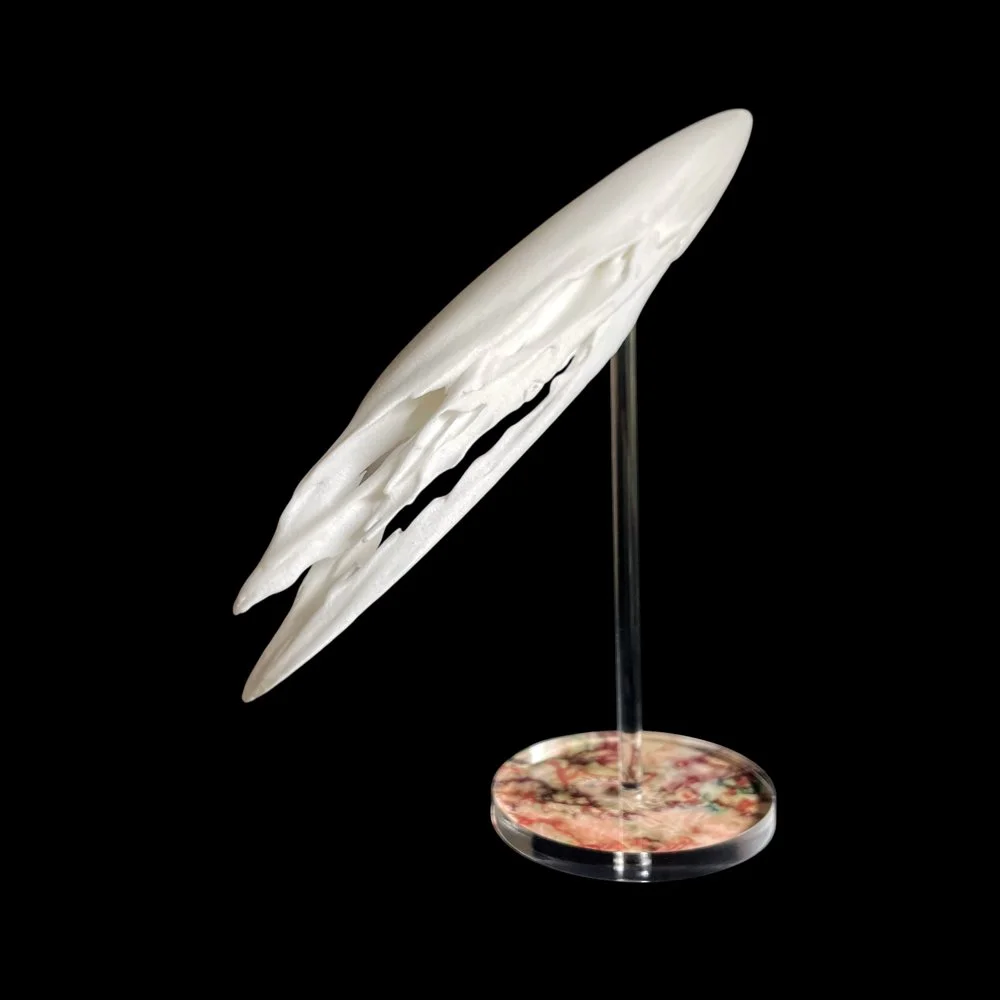
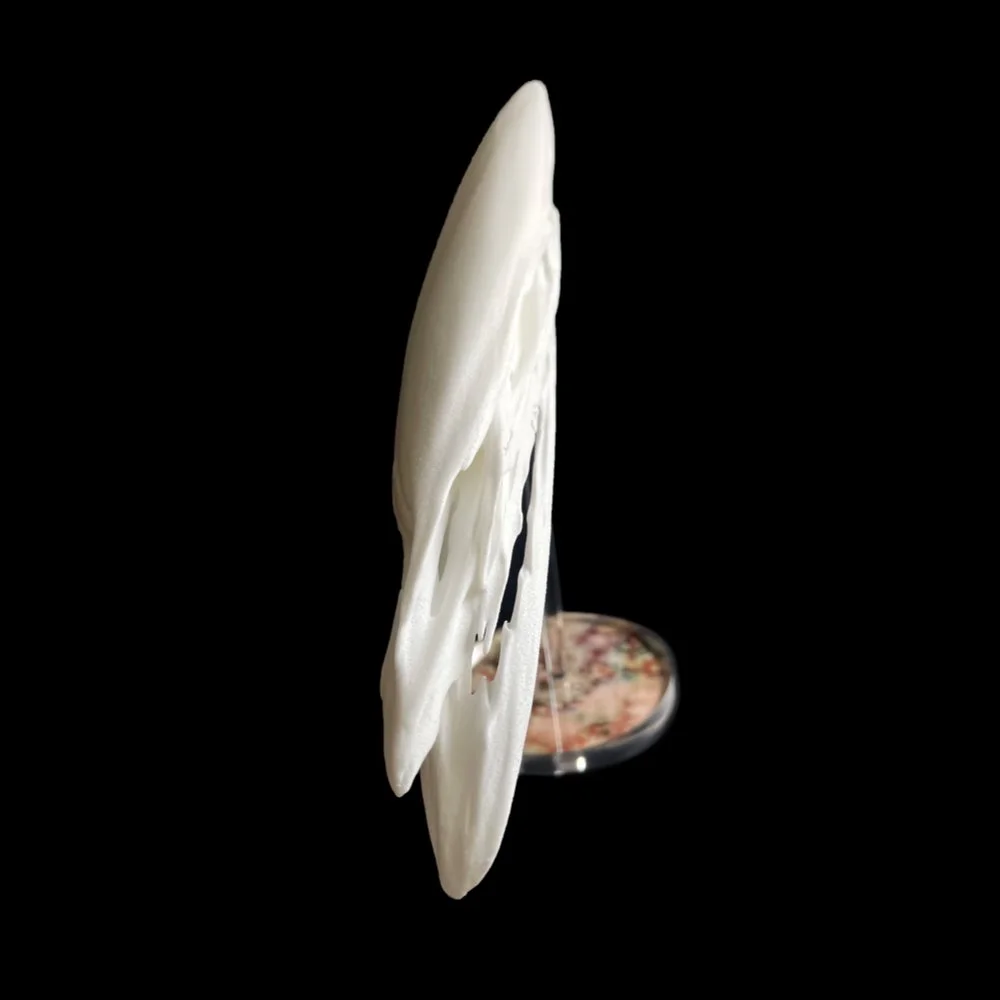
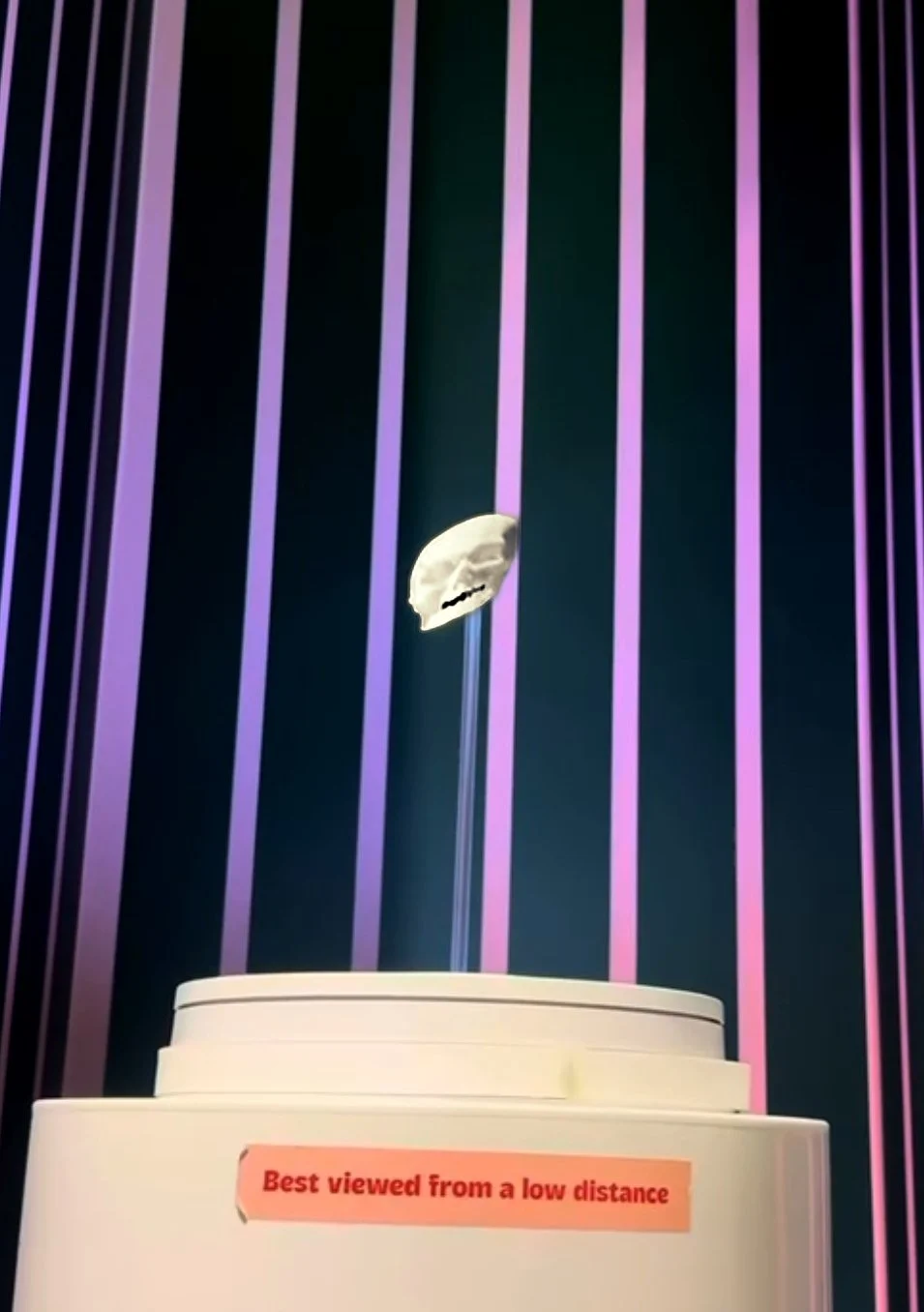
Just Another Vanitas (Exhibition Piece), SLS 3D Print, Polished white nylon, 36.09mm x 42.38mm x 360.0mm, 2025. Commission featured at the new perception art space in Sydney: Mind Games - Art Alive “where reality bends and perspective shifts”.
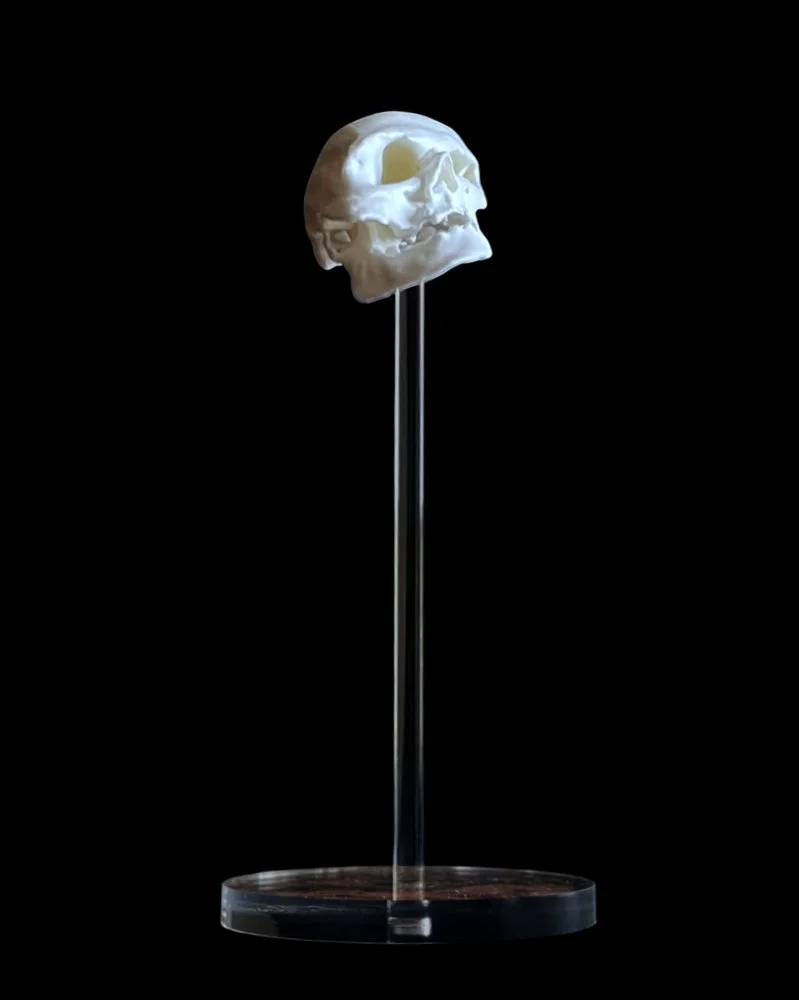
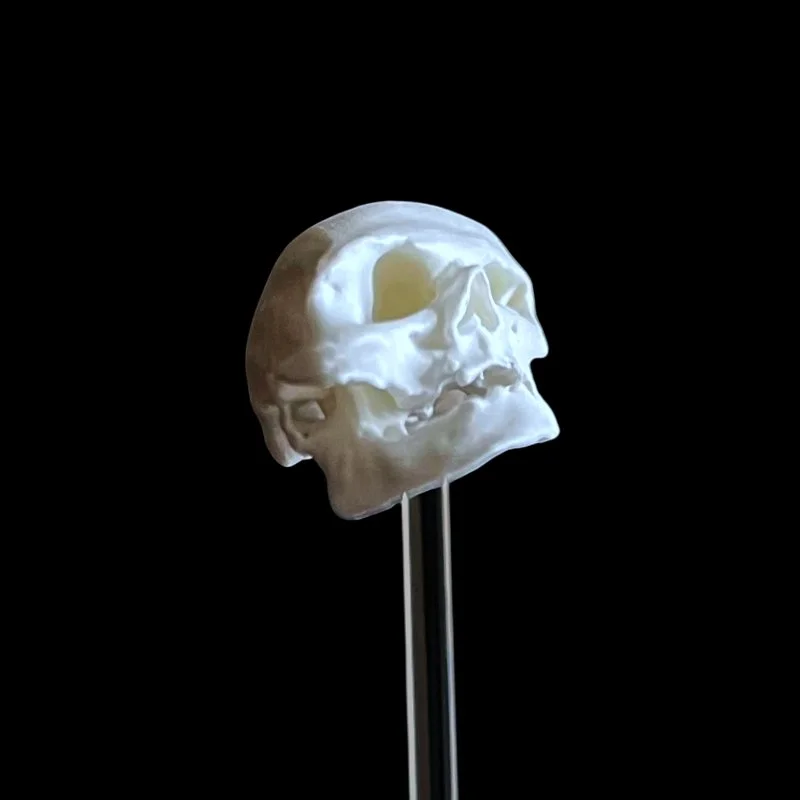
“Your artwork receives lots of comments and feedback. All positive!”
Project Overview and Specifications
-
Client / Venue: Cre8 Co, Mind Games - Art Alive! (Broadway / Chippendale, Sydney)
Scope: Permanent immersive sculptural installation for a new interactive illusion museum.
Objective: Create a large exhibition piece of Just Another Vanitas that engages visitors in participatory play, challenging perception and space. This exhibition is a multisensory, perception-shifting interactive arts space, showcasing artists from around the world.
-
The Inspiration:
Just Another Vanitas (2019-2025) takes its inspiration from the worlds of art history, visual theory and emerging technologies.
Originated from Holbein’s mysterious painting, The Ambassadors, the artwork and is a project following discussion with an art historian at the National Gallery. Mystery is centred on understanding the anamorphosis of the skull. Imagine holding it in your hand!? Could the work reveal Holbein’s method? The aim is to ‘bring to life’ his iconic anamorphic skull as a 3D-printed sculpture making the ‘impossible’ physical; bridging the gap between the digital and physical, making the virtual world felt.
The Illusion:
If you look closely, you'll see a strange, squiggly shape on the floor. It doesn't really look like anything at first. But if you move and look at it from the side, something amazing happens: The squiggly shape suddenly transforms into a clear image of a skull!
So why is Holbein’s skull so distorted?
It’s like a magic trick for your eyes; it can only be seen for a moment. But the skull is so big, it trumps all the other symbols of wealth and knowledge. It’s actually a clever way of reminding us that nothing lasts forever.
The skull is simply another vanity: Death too, is just an illusion, it means nothing in the end. But the painting gets even more sneaky, because hidden behind the curtain is a small crucifix, suggesting all that really matters is the possibility of eternal life.How does the distortion work?
Holbein used a special technique called anamorphosis to make the skull look distorted from one angle, but normal from another. The aim is to defy our senses and encourage new ways of looking.
How to interact with the artwork?
To see the illusion "at work", visitors participate and video and photograph themselves with the piece by viewing from the upper right or lower left angles, or by moving their camera in a sweeping motion across the sculpture from top to bottom.
-
Materials and Fabrication:
How was Just Another Vanitas (Exhibition Piece) made?
Starting as a 3D scan of a real skull, this artwork was carefully sculpted and then transformed in 3D CAD software using the 2D Ambassadors skull as a reference. Adapted from the original Collector’s Limited Edition, the design was scaled up by 150%, 3D printed, and installed on a custom display stand engineered for the larger frame. The result is a never-before-seen anamorphic sculpture allowing the viewer to animate the distortion in three dimensions as they adapt their position to ‘correct’ the skull.
What material is it made from?
Selective Laser Sintering (SLS) 3D printing uses a laser to fuse layers of nylon (a type of plastic) powder into a solid object. SLS nylon is certified as medical, skin and food-safe, and has great resistance to water, chemicals and the elements. 3D printing also reduces the environmental impact of manufacturing by lowering waste, energy usage, and need for space compared to traditional factory processes.
Lighting and Space:
A integrated turntable introduces continuous motion, while a backdrop of contrasting graphic lines plays on classic optical illusions of position and orientation. Designed to seamlessly fit the surrounding exhibit space, the installation remains fully accessible to all visitors.